
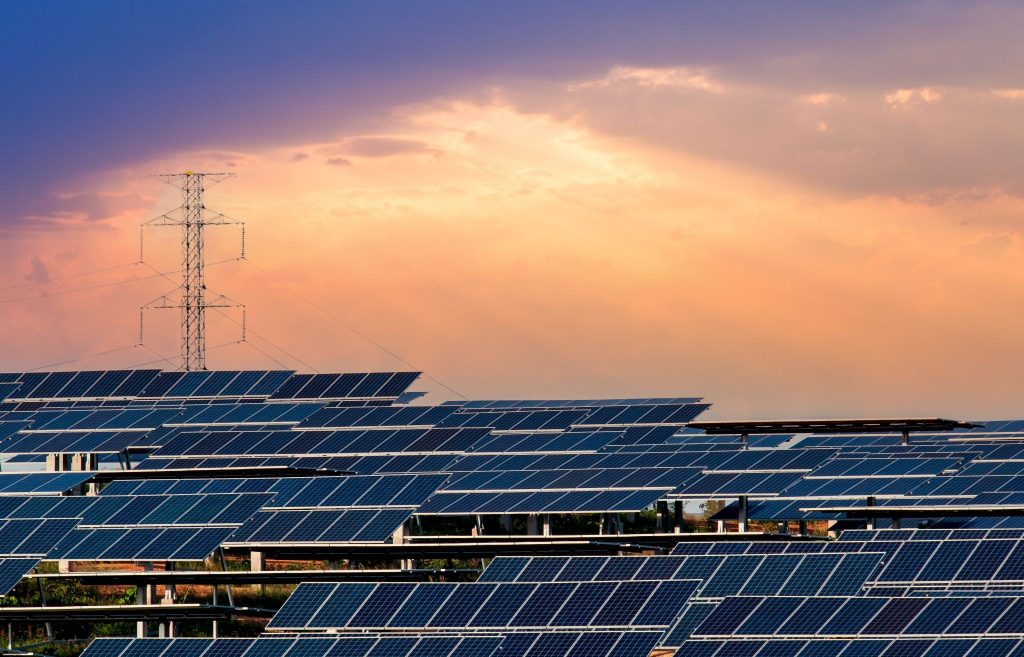
Every hour, the sun delivers more energy to the surface of the earth than the entire human civilization consumes in a year. Let that sit for a moment. Not in a day. Not in a week. Every single hour. The energy is there, relentless, generous, and clean. For most of human history, we lacked the technology to capture it at meaningful scale. That era is ending, faster than almost anyone predicted, and the technology driving that shift is the modern solar energy system.
Solar is no longer an experimental curiosity or a niche choice for eco-conscious households with deep pockets. It is the fastest-growing energy source on earth. In 2023, global solar capacity additions broke records for the nineteenth consecutive year. The cost of solar electricity has fallen by more than 90% over the past decade, making it the cheapest source of electricity in history in a growing number of markets. Countries that once dismissed solar as impractical are now building gigawatt-scale solar installations that power millions of homes. And the technology itself, the panels, the inverters, the storage systems, and the software that ties it all together, has advanced to a level of sophistication that would have seemed extraordinary just fifteen years ago.
What a Modern Solar Energy System Actually Is
Beyond the Panel on the Roof
When most people think of solar energy, they picture a panel on a roof. That image is not wrong, but it is incomplete in ways that matter for understanding the technology. A modern solar energy system is an integrated assembly of components that work together to capture sunlight, convert it to electricity, condition that electricity for use, manage its flow, store surplus energy, and communicate performance data in real time. The panel is the most visible element, but it is one part of a sophisticated system whose other components are equally important to performance and reliability.
The basic architecture of a solar energy system for a residential or commercial building consists of the solar array, which is the collection of photovoltaic panels that convert sunlight to direct current electricity. The inverter or inverters, which convert that direct current to the alternating current used by buildings and the electricity grid. The mounting and racking system, which secures the panels to the roof or ground at optimal angles. The monitoring system, which tracks production, consumption, and system health in real time. The metering infrastructure, which measures electricity flowing to and from the grid. And increasingly, the battery storage system, which stores surplus solar electricity for use when the sun is not shining.
Grid-Tied, Off-Grid, and Hybrid Systems
Modern solar energy systems are not all the same architecture. The relationship between the solar system and the electricity grid defines three distinct system types, each suited to different situations and priorities.
Grid-tied systems are connected to the public electricity grid and are by far the most common type for residential and commercial installations in urban and suburban areas. They operate in a straightforward way. When the solar panels produce more electricity than the building is currently using, the surplus flows onto the grid. When the building needs more electricity than the panels are currently producing, such as at night or on cloudy days, electricity flows from the grid. A net metering arrangement with the utility company determines the financial value of electricity exported to the grid. Grid-tied systems are simpler and less expensive than off-grid systems because they do not require battery storage. Their primary limitation is that they go offline during grid outages. Because they are connected to the grid, safety regulations require them to shut down automatically during an outage to protect utility workers who might be working on power lines.
The Photovoltaic Panel: How Sunlight Becomes Electricity
The Physics of Solar Conversion
The photovoltaic panel is where the fundamental energy conversion happens, and understanding how it works reveals why solar energy is such a compelling technology. The word photovoltaic comes from the Greek word for light and the name Alessandro Volta, the pioneer of electrical science. Photovoltaic means converting light directly to voltage, to electricity, through a physical process rather than through combustion, mechanical rotation, or any other intermediate step. This directness is one of solar energy’s most important advantages. Fewer conversion steps means fewer energy losses and fewer moving parts that can fail.
The photovoltaic effect was first observed by French physicist Edmond Becquerel in 1839, but practical photovoltaic cells were not developed until the 1950s at Bell Labs in the United States. The first silicon solar cell, developed in 1954, converted sunlight to electricity at about 6% efficiency. Today’s commercial silicon solar panels achieve efficiencies of 20% to 23% for standard monocrystalline panels, and certain high-performance panels using advanced cell architectures exceed 23%. Research laboratory cells have demonstrated efficiencies above 47% using multi-junction concentrator designs, pointing to the continued headroom for further improvement.
Panel Technologies and How They Compare
Modern solar panels are not a monolithic technology. Several distinct cell and module technologies are commercially available, each with different efficiency levels, cost profiles, appearance characteristics, and performance behaviors in different conditions.
Monocrystalline silicon panels are made from silicon crystals grown as a single continuous crystal structure, a manufacturing process that produces the most pure and uniform silicon and therefore the highest efficiency cells. Monocrystalline panels are recognizable by their uniform dark color and are the dominant technology in the residential market. Their higher efficiency means more power output per unit of roof area, making them particularly valuable where space is limited.
Polycrystalline silicon panels, also called multicrystalline panels, are made from silicon that is melted and poured into molds rather than grown as a single crystal, resulting in a crystalline structure with multiple grain boundaries. This manufacturing process is less expensive but produces slightly lower efficiency than monocrystalline technology. Polycrystalline panels are recognizable by their blue, speckled appearance. They have largely ceded market share to monocrystalline panels as the cost premium for monocrystalline has declined.
Inverters: The Brain of the Solar Energy System
Why Inverter Technology Matters More Than Most People Realize
If the solar panel is the heart of a modern solar energy system, pumping raw electrical energy from sunlight, the inverter is the brain. Its job is to take the direct current electricity produced by the panels and convert it to the alternating current electricity that virtually all buildings, appliances, and grid infrastructure use. But the modern solar inverter does much more than this fundamental conversion task. It optimizes energy harvest, monitors system performance, manages grid interaction, enables battery integration, and serves as the primary communication hub of the entire solar system.
The inverter’s role in energy harvest optimization is particularly significant. Solar panels in a real-world installation rarely produce exactly the electrical output that their rated specifications suggest, because conditions rarely match the standard test conditions used for rating. Temperature variations, shading from trees or chimneys, soiling from dust and bird droppings, and manufacturing tolerances all affect individual panel output. The inverter uses a technique called maximum power point tracking to continuously adjust the electrical operating point of the solar array, extracting the maximum available power under actual conditions rather than simply converting whatever current the panels happen to be generating.
Three distinct inverter architectures are common in modern solar energy systems, and the choice between them has meaningful implications for system performance, expandability, and cost. String inverters connect multiple panels together in series strings, with the string output feeding into a single central inverter. This is the simplest and least expensive architecture, but it has a significant limitation: the output of the entire string is constrained by the lowest-performing panel in the string. If one panel is shaded or underperforming, the output of all panels in the string is affected. String inverters work well in installations where all panels face the same direction, receive similar levels of sunlight, and are not subject to significant shading.
Battery Storage: Making Solar Energy Available Around the Clock
How Modern Solar Batteries Work and Why They Are Transformative
Battery storage is arguably the development that most dramatically expands the value proposition of modern solar energy systems. Without storage, a solar energy system produces electricity only when the sun shines, which does not perfectly match when electricity is needed. With storage, surplus solar electricity generated during the day can be stored and used during the evening, at night, or during periods of low solar production, dramatically increasing the fraction of a building’s electricity needs that can be met from solar generation.
Modern solar batteries use lithium-ion chemistry in the vast majority of installations. Lithium-ion batteries offer a combination of energy density, cycle life, efficiency, and cost that is superior to the lead-acid batteries that dominated solar storage in earlier decades. The round-trip efficiency of lithium-ion batteries, meaning the percentage of energy put into the battery that can be recovered from it, typically exceeds 90%, compared to 70% to 85% for lead-acid technology. This efficiency difference compounds significantly over time, meaning a lithium-ion battery system stores and delivers substantially more usable energy over its lifespan than an equivalent lead-acid system.
Solar Monitoring and Smart Energy Management
Modern solar energy systems generate enormous amounts of data. Every panel’s output, every inverter’s performance, total system production, household consumption, battery state of charge, grid export and import, and environmental conditions like irradiance and temperature are all tracked continuously by monitoring systems and transmitted to cloud platforms accessible through smartphone applications.
This data transparency is genuinely valuable rather than merely impressive. Real-time monitoring allows homeowners to understand how their energy is being produced and used, identify underperforming components before they cause significant energy losses, verify that the system is functioning as promised, and make behavioral changes that maximize self-consumption of solar electricity. It also provides the data foundation for increasingly sophisticated smart energy management systems that automatically optimize the operation of connected devices and systems.
Final Thoughts
Modern solar energy systems represent one of the most remarkable technological and economic success stories of the early twenty-first century. In less than two decades, solar has transformed from an expensive niche technology into the cheapest source of electricity in human history in many parts of the world. The panels have become more efficient, more durable, and more affordable. The inverters have become smarter and more versatile. Battery storage has made solar generation available around the clock. And the software systems that tie these components together have created intelligent energy management capabilities that were science fiction a decade ago.
But the most important story about modern solar energy systems is not the technology itself. It is what the technology means. It means that the energy transition, the shift from a global energy system powered by finite, polluting fossil fuels to one powered by clean, renewable sources, is no longer a distant aspiration. It is underway, measurably and irreversibly, in every corner of the world. The sun has always been there, offering its extraordinary abundance. We are finally, genuinely, learning to listen.