There is something almost poetic about it. The same star that has sustained life on this planet for billions of years is now powering our refrigerators, charging our phones, and heating our water. Not through some distant technological fantasy, but through panels quietly sitting on rooftops in neighborhoods around the world, doing their work without noise, without emissions, and without asking for anything in return except sunlight.
Solar energy is no longer a niche technology reserved for off-grid enthusiasts or environmentally driven early adopters. It is a mainstream, economically rational, and increasingly sophisticated energy solution. The cost of solar panels has fallen by more than 90 percent over the past decade. Installation capacity worldwide has grown from a few gigawatts in the early 2000s to over one terawatt today. And the systems themselves have evolved from simple panel-and-inverter setups into intelligent, integrated energy ecosystems that can predict consumption, manage storage, and interact with the electrical grid in real time.
The Science Behind Solar Energy: How Sunlight Becomes Electricity
Before diving into what modern solar energy systems look like, it helps to understand the fundamental science that makes them possible. Because once you grasp what is actually happening inside a solar panel, the rest of the technology makes intuitive sense.
The core process is called the photovoltaic effect. The word photovoltaic comes from the Greek word for light, photos, and the name of the physicist Alessandro Volta, who pioneered work on electricity. The photovoltaic effect describes the phenomenon where certain materials generate an electric current when exposed to light. It was first observed by the French physicist Edmond Becquerel in 1839, but it took over a century of materials science, semiconductor research, and engineering refinement before it became the basis of a practical energy technology.
Modern solar panels are made primarily from silicon, the second most abundant element on Earth and a semiconductor, meaning it conducts electricity under certain conditions but not others. Solar cells, the individual units that make up a panel, consist of two layers of silicon that have been treated, or doped, with different materials to give them opposing electrical charges. The top layer is doped with phosphorus to give it extra electrons, making it negatively charged, the N-type layer. The bottom layer is doped with boron, which removes electrons and creates positive charge, the P-type layer. Where these two layers meet is called the P-N junction, and it is the heart of the photovoltaic effect.
From Direct Current to Usable Power: The Role of the Inverter
The electricity that solar panels produce is direct current, commonly known as DC. The electrical grid and the vast majority of home appliances run on alternating current, or AC. This is where the inverter becomes essential. The inverter is the component that converts the DC electricity from the panels into the AC electricity that powers your home.
Modern inverters are not passive conversion boxes. They are sophisticated electronic devices that continuously monitor the output of the solar array, optimize the power extraction from each panel, communicate with the grid, manage energy flow to and from batteries if storage is present, and provide real-time performance data to monitoring systems. The intelligence built into modern inverters is a significant part of what makes modern solar energy systems so much more capable than the early installations of a decade ago.
Anatomy of a Modern Solar Energy System
A modern solar energy system is more than just panels on a roof. It is a coordinated system of components working together to capture, convert, store, manage, and distribute electrical energy. Understanding each component and its role gives a complete picture of how the technology actually functions.
Solar Panels: Types and Technologies
The panels themselves have evolved significantly since the first commercial silicon cells. Today there are three primary types available for residential and commercial installations, each with distinct characteristics in terms of efficiency, appearance, cost, and performance in different conditions.
Monocrystalline silicon panels are manufactured from a single continuous crystal of silicon, which gives them a uniform dark appearance and the highest efficiency of any mainstream panel technology. Top monocrystalline panels from leading manufacturers now achieve efficiencies above 22 percent, meaning they convert more than 22 percent of the sunlight hitting them into electricity. They perform better in low-light conditions and high temperatures relative to other types, and they have the smallest footprint for a given power output. They are also the most expensive to manufacture, though the price gap with other technologies has narrowed considerably.
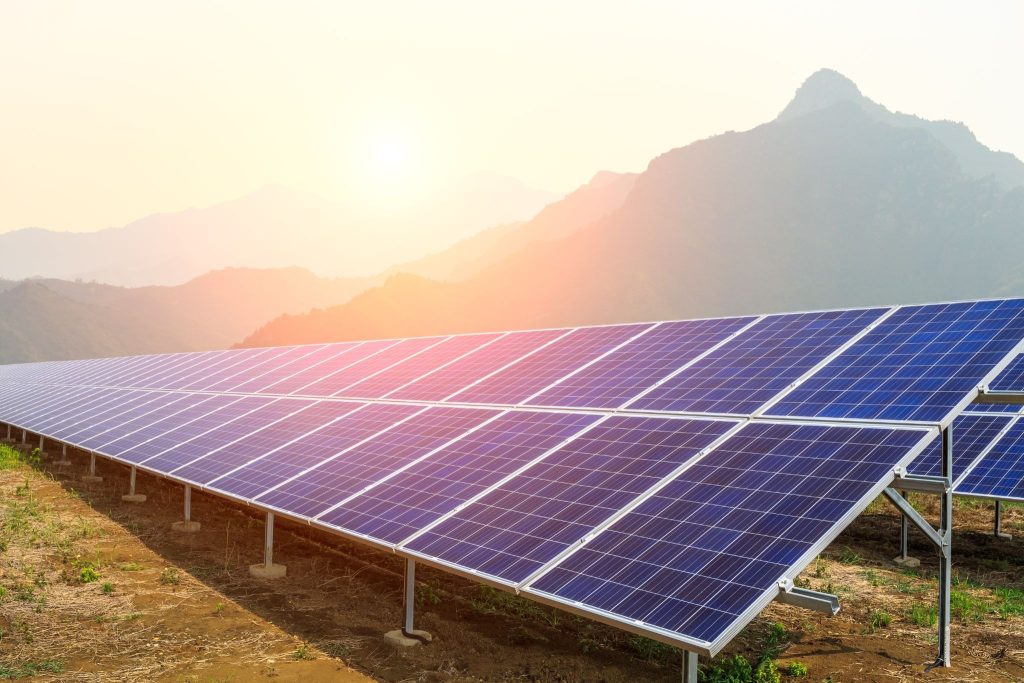
Polycrystalline panels are made from silicon that has been melted and recast rather than grown as a single crystal, resulting in a characteristic blue, fragmented appearance. They are slightly less efficient than monocrystalline panels, typically in the 15 to 17 percent range, but are manufactured at lower cost. They have been the dominant technology in the residential market for years, though they are increasingly being displaced by monocrystalline panels as the cost differential has narrowed.
Battery Storage: The Component That Changes Everything
For most of solar energy’s history, residential systems were designed to feed electricity into the grid during the day and draw from the grid at night. This net metering model works reasonably well in many markets, but it has a fundamental dependency: the grid must be available, and the economics depend on favorable net metering policies that utilities and governments can change.
Battery storage transforms the equation. A solar system with battery storage can capture excess daytime generation and use it after sunset, creating a degree of energy independence that grid-tied systems without storage cannot achieve. Modern residential battery systems, led by products like the Tesla Powerwall, the Enphase IQ Battery, the sonnen ecoLinx, and the SunPower SunVault, are lithium-ion based, wall-mounted or floor-standing units that can store between 10 and 30 kilowatt-hours of energy, enough to power an average home through an evening or through a grid outage.
The value proposition of battery storage depends significantly on local electricity market conditions. In markets with time-of-use electricity pricing, where electricity costs more during peak demand hours in the evening, a solar-plus-storage system can charge batteries during the day from solar generation and discharge during peak hours, avoiding the highest electricity rates. In markets with high grid reliability and stable net metering compensation, the financial return on battery storage is more modest, and the primary value shifts toward energy security and resilience.
The Smart Energy Management System
What truly distinguishes modern solar energy systems from earlier generations is the integration of intelligent energy management software. Modern systems are equipped with monitoring and control platforms that track energy generation, home consumption, battery state of charge, and grid interaction in real time. These platforms are accessible via smartphone apps and web dashboards, giving homeowners unprecedented visibility into their energy flows.
Types of Solar Energy System Configurations
Not all solar installations are identical. The configuration of a system, how it relates to the electrical grid and what it can do independently, fundamentally shapes its capabilities, costs, and appropriate applications.
Grid-Tied Systems
Grid-tied systems are the most common configuration for residential and commercial solar installations. They are connected to the public electrical grid and feed excess solar generation into it, receiving credit through net metering or feed-in tariff programs. They do not require battery storage to function, which reduces upfront cost significantly. However, they have a critical limitation: they cannot operate during a grid outage. This is a safety requirement, because an inverter feeding electricity into the grid during an outage could endanger utility workers attempting to restore service. For most urban and suburban homeowners with reliable grid service, a grid-tied system represents the most cost-effective entry into solar energy.
Hybrid Systems
Hybrid systems combine grid connection with battery storage. They can feed excess energy to the grid during periods of high generation, store energy for later use, and draw from the grid when neither solar generation nor battery reserves are sufficient. During a grid outage, a hybrid system with a capable inverter and sufficient battery capacity can island, meaning it disconnects from the grid and continues operating as an independent power source. This makes hybrid systems the configuration of choice for homeowners who want both financial optimization and energy resilience.
Modern Solar Technologies Beyond Photovoltaics
While photovoltaic panels are the dominant technology in the modern solar energy landscape, they are not the only way solar energy is captured and used. A complete understanding of modern solar energy systems includes awareness of complementary technologies that address different aspects of energy demand.
Solar Thermal Systems for Water and Space Heating
Solar thermal technology converts sunlight directly into heat rather than electricity. Solar water heating systems use collectors mounted on rooftops to absorb solar radiation and transfer that heat to water circulating through the system. The heated water is stored in an insulated tank for use in showers, taps, and central heating systems. In climates with adequate solar radiation, solar water heating can meet 50 to 80 percent of a household’s hot water demand, representing significant savings on energy bills and a meaningful reduction in carbon emissions associated with water heating.
Compared to photovoltaic systems, solar thermal collectors are highly efficient at their specific task. While a PV panel converts 15 to 22 percent of incoming solar radiation into electricity, a solar thermal collector can convert 60 to 80 percent of incoming radiation into heat. This makes solar thermal technology particularly compelling for applications where heat is the end product, such as water heating, space heating, and certain industrial processes.
The Economics of Solar: What the Numbers Actually Look Like
Understanding how solar systems work is only part of the picture for anyone considering an installation. The financial dimension is equally important, and it is an area where modern solar energy systems have become dramatically more compelling over the past decade.
The installed cost of residential solar has fallen from over 8 dollars per watt in 2008 to approximately 2.5 to 3.5 dollars per watt in the United States in 2024, depending on system size, location, and installer. For a typical 8-kilowatt residential system, this translates to a total cost before incentives of roughly 20,000 to 28,000 dollars. The federal solar investment tax credit in the United States currently offers a 30 percent credit against federal income taxes for solar installations, reducing that cost to approximately 14,000 to 20,000 dollars. Many states offer additional incentives, rebates, and property tax exemptions that further reduce the net cost.
Final Thoughts
Modern solar energy systems represent one of the most consequential technology transitions in the history of human energy use. They are not a perfect solution to every energy challenge, and they are not right for every situation. But for an enormous and growing number of homes, businesses, and communities around the world, they represent a genuinely better way to generate electricity: cleaner, increasingly cheaper, more resilient, and more aligned with the long-term sustainability of the planet.
The technology is real. The economics are compelling. The science is proven. And the sun, the most powerful energy source in our solar system, is not sending a bill. Understanding modern solar energy systems is not just an exercise in technical literacy. It is preparation for a future that is already here, quietly generating electricity on rooftops in every country on earth, one photon at a time.